The Room Nobody Photographs: Turning a Downstairs Cloakroom into a Quiet Brand Signal

Photo: Dave Hitchborne, CC BY-SA 2.0, via Wikimedia Commons
Most rooms in a house or studio get a plan. The downstairs cloakroom usually gets the leftover paint, a candle someone was given at Christmas and a mirror hung at the height that suited the person holding the drill. It is the room nobody photographs, which is exactly why it is worth a second look. In a home studio, a small shop or a client-facing office, the smallest room is a close-up of your brand. Clients are not judging the tile grout. They are noticing whether the details hold together.
Start with the unglamorous bit: air
Before colour or art, deal with moisture. British homes are good at keeping the weather out and sometimes too good at keeping steam in. If your cloakroom has no window, an extractor fan with a run-on timer is not a luxury. It is the difference between a room that feels cared for and one that smells of damp towels. Use a moisture-resistant paint — eggshell or a dedicated bathroom paint — rather than standard matt emulsion. In older properties, do not seal every gap in the name of efficiency; a little background ventilation helps. This is the least visible part of the job and the one clients will notice without knowing why.
Colour is a decision, not a default
Small rooms can carry strong colour. A deep green, a warm clay, a soft ochre. The trick is to commit: paint the walls, ceiling and woodwork in related tones so the edges soften and the room feels deliberate rather than chopped up. If you rent or have a tight budget, one well-chosen wall or even the inside of the door can do the work. Test patches in the actual light, because a north-facing cloakroom in a UK winter is a different room from the one in the paint chart. If your brand has an accent colour, use it as a small repeated note — the edge of the door, the frame of a print, the towel — not a theme park. The smallest room is where restraint reads as confidence.
Light it like a room, not a cupboard
One ceiling light is a start, not a scheme. A wall light or a mirror light at face height, a warm white bulb around 2700K, and a dimmer if the wiring allows will make the space feel considered. Cool white makes everyone look like they are in a storage unit. A mirror should bounce light, not just fill a gap. Hang it so it reflects something worth looking at — a coloured wall, a framed print, a plant — rather than the back of the door. Avoid dark corners; a small room with one bright patch and three shadows feels tired.
The hand test: hardware and touch
Think about what people actually touch: the door handle, the tap, the flush, the towel ring, the hook. These should feel solid and either match in finish or at least not argue. You do not need to replace everything. A new tap, a decent loo roll holder and a hook that holds a real coat can lift the room. Keep a spare roll visible but not staged. A small bin with a lid is worth more than a scented candle. If the budget stretches, a properly sized mirror and a well-made towel ring will do more for the room than another ornament.
One piece of art, one line, one idea
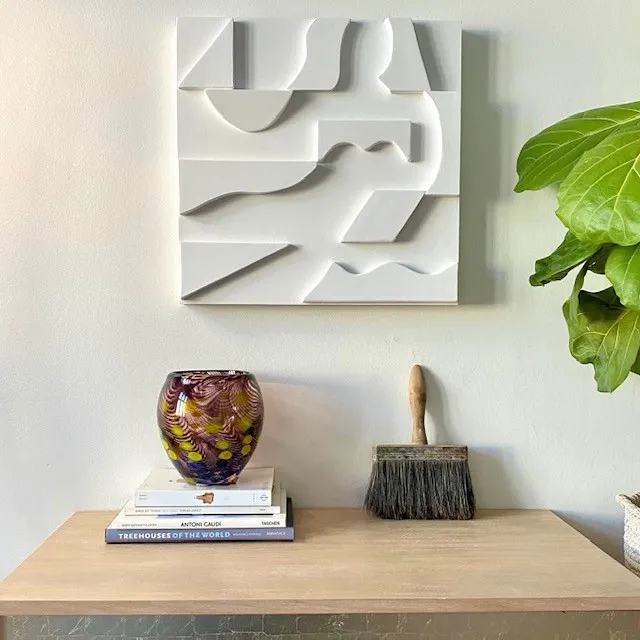
Not a gallery. One framed print, one small sign, one object is enough. If you use signage, make it a sentence you would actually say. Avoid jokey ‘wash your hands’ signs unless that is genuinely your brand. For a home studio, a framed colour study or a line about how you work can be the whole story. For a shop, a small card with opening hours in the same typeface as your window. The single piece should look as if someone chose it, not as if it was the only thing left in the frame. One thing done well beats five things done politely.
The budget refresh
Paint, bulb, mirror, towel, tray. A new light shade. A small plant that tolerates low light. A bin with a lid. Clean the extractor grille. Fix the dripping tap. These are not glamorous moves, but they are the ones that make a small room feel intentional. You do not need a spa. You need a room that works and does not undo the impression made by the rest of the building.
What it says about the brand
If the big rooms are polished and the small room is chaos, clients notice. The smallest room is where your brand is tested at close range, without the softening effect of a meeting table. It does not need to be expensive. It needs to be considered. A calm brand can have a calm cloakroom; a playful brand can have one wink. The guest loo test is not about passing. It is about whether the room says someone thought about this. In 2026, with more UK businesses meeting clients in home studios and small high-street units, that quiet signal is worth more than a slogan on the wall.