The Street-Facing Window: Curtain Decisions That Hold Their Own Outside
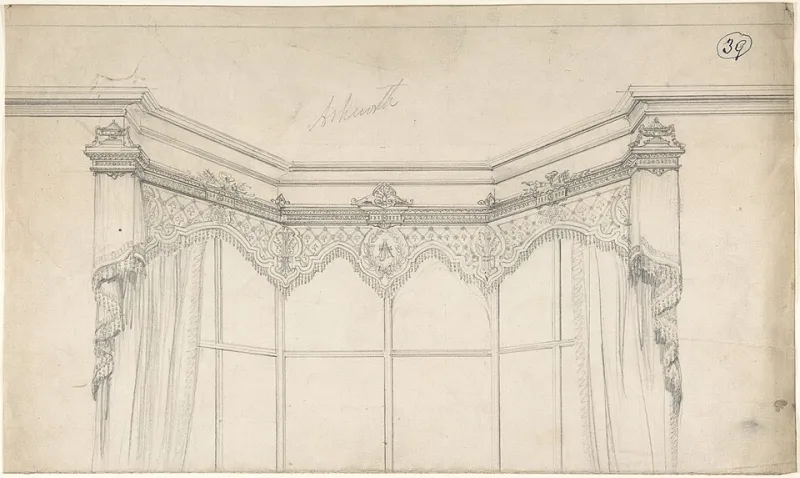
Photo: Charles Hindley & Sons, CC0, via Wikimedia Commons
A street-facing window is never just a window. In a British terraced street it is the public face of the room and the private boundary between you and the pavement. Get the curtains wrong and you either leak light, lose warmth or create a shape from outside that looks like a bedsheet in a hurry. Get them right and the window feels considered from both sides.
At Just4Design, the useful starting point is not fabric. It is a short, honest brief. What does this window actually owe you? Privacy, darkness, warmth, daylight, a view, or simply a calmer edge to the room? Once you rank those, the fabric decisions become much less mysterious.
Start with the problem, not the sample book
Before you fall for a linen, list the practical facts. Does a street lamp hit the glass at eye level? Is the room overlooked from the pavement or from a bus stop? Does the radiator sit under the sill? Is the window a Victorian bay with awkward returns, or a sash that already has shutters? Is the room cold in February and stuffy in July?
Write one sentence: this window needs to block the street lamp, keep the heat in and still let me see the tree. That sentence will stop you ordering a heavy blackout curtain for a room that only needed daytime privacy.
Privacy and blackout are different jobs
This is where many curtain orders go wrong. Privacy is about sightlines. Blackout is about light. A voile or sheer gives daytime privacy, but at night, with a lamp on, it can become a lit stage. A blackout lining blocks light, but if the curtain has gaps at the edges, it will not give you the darkness you expected.
For a street-facing sitting room, privacy and warmth may matter more than total blackout. For a bedroom, blackout is usually the point. A practical compromise is a well-lined curtain with generous overlap at the centre and returns at the wall, or a blackout blind behind a softer curtain. Do not assume the word thermal on a label solves everything. Fit matters as much as fabric.
The lining question, in plain terms
Standard lining adds body, protects the face fabric and gives modest light control. Blackout lining blocks light and can make a curtain hang more stiffly, so the heading needs to suit it. Interlining is the extra layer, usually a soft flannel or bump, that adds warmth and a fuller, quieter hang. In older houses with thin walls and draughty bays, interlining is often the more useful upgrade. It also softens the look from outside, which helps on a terraced street where everyone can see everyone else's windows.
A simple rule: blackout for bedrooms and media rooms; interlining for cold rooms and period windows; standard lining for rooms where you mainly want privacy, shape and a bit of protection. If you need both warmth and darkness, ask whether a blackout lining plus interlining will make the curtain too bulky for the track or the stack.
Measure the stack, not just the glass
Curtains need somewhere to go when they are open. That is the stack. If a radiator sits under the window, full-length curtains can sit over it and hold the heat back. A sill-length curtain, a Roman blind or a well-fitted roller may be the more sensible choice. If you want full length, check where the fabric will gather: over a light switch, a radiator valve, a window handle or the return of a bay.
Measure the track or pole, the drop to the floor, and the space at each side. Then check the heading. Pencil pleat, eyelet, wave and pinch pleat all need different amounts of fabric and clearance. A generous gather usually looks calmer from the pavement than a tight, mean curtain, but it also needs more stack. This is the boring measurement that saves an expensive mistake.
Bays, sashes and period quirks
Period bay windows are lovely and rarely simple. A curved track or a track that follows the angles can work, but the curtains need room at the returns. Victorian and Edwardian bays often have deep reveals, ceiling fixings and radiators tucked underneath. If the bay is shallow, a Roman blind can be the tidier answer. If the windows are sashes with existing shutters, do not let the curtains fight them.
In older homes, check what you are drilling into before you order brackets. Lath and plaster, lintels and listed-building rules all deserve a moment of thought. A plain linen curtain with proper interlining often looks more considered in a period room than a fussy arrangement that ignores the architecture.
When blinds do the job better
Blinds are not the poor relation. A Roman blind in a bathroom or kitchen can handle moisture and keep the window clear. A roller blind with a blackout fabric is neat in a spare room. A café-style curtain or a half-blind gives daytime privacy without shutting out the sky. In a street-facing room where the window is tall and narrow, a blind can look sharper than curtains that never quite stack away from the glass.
The trade-off is softness. Blinds are crisper; curtains are quieter. In a room that already feels hard, curtains may do more for the atmosphere. In a room that feels cramped, a blind may be the kinder choice.
A simple decision sequence
First, write the one-sentence brief. Second, rank privacy, darkness, warmth and daylight. Third, choose the lining or interlining that matches the top two priorities. Fourth, confirm the fixing, the stack and the clearance for radiators and handles. Fifth, choose a heading that suits the fabric and the track. Sixth, order a sample and look at it in the room at morning and dusk, not just on the website. Seventh, book the fitter or set aside a proper weekend for brackets and hemming.
Before the final order, stand on the pavement at dusk. Can you see in? Does the curtain look tidy from outside? Does the colour still read the way you intended? A street-facing window has to work for the room and for the street. The best ones do both without shouting about it.